The Real Total Cost of a 3 BHK in Gandhinagar

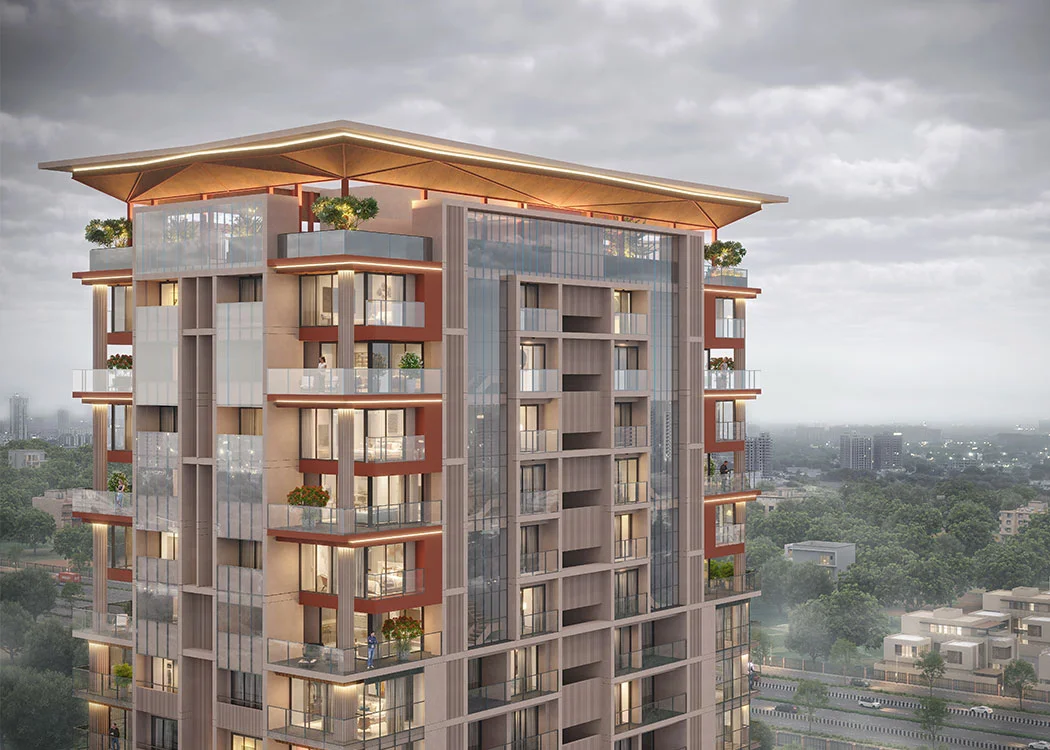
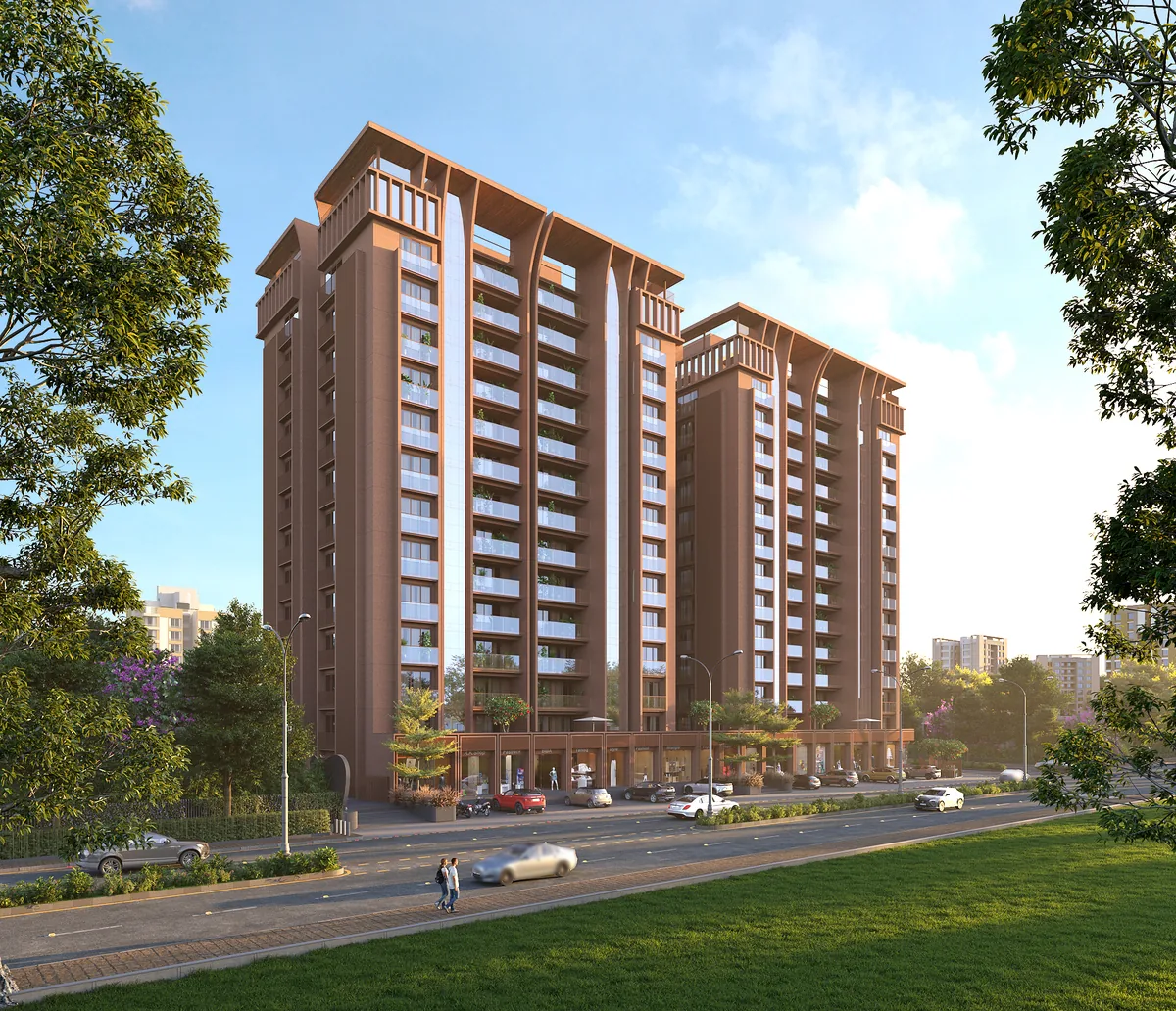
Ariva twin towers at Sargasan used in a Gandhinagar 3 BHK total cost guide

When a sales desk quotes a 3 BHK in Gandhinagar, the number on the brochure is rarely the number you will need to fund. The total cost of a 3 BHK in Gandhinagar includes statutory charges, project-stage taxes, parking and floor premiums, society deposits, loan-side fees and the fit-out you actually plan to live with.

This guide helps budget-conscious buyers build a fair comparison worksheet. It is educational information, not tax, legal, loan or investment advice. Rates and rules change — confirm every figure on the official GARVI portal and in the promoter's approved cost sheet before you commit.

Whether you are comparing towers in Sargasan or Kudasan, the same discipline applies: base price is only layer one. Pair this worksheet with our 3 BHK flats in Gandhinagar buyer guide and GujRERA verification guide before you pay a token.

Key takeaways

  • Eight cost layers from base price to loan-side charges.
  • Gujarat statutory framework for stamp duty and registration — with links to GARVI.
  • GST decision tree for under-construction vs ready inventory.
  • A quotation comparison table you can reuse across projects.
  • No unofficial Ariva pricing — request the sales-approved cost sheet only.

8

Cost layers to worksheet.

4.9%

Typical Gujarat stamp duty — verify live.

12

Questions for sales before token.

10

FAQs with schema markup.

Quick answer

To estimate the real total cost of a 3 BHK in Gandhinagar, start with the promoter's approved unit price for the exact flat you are considering. Add stamp duty and registration on the higher of agreement value or government guideline value, GST if the sale is under the under-construction framework, parking or floor-rise premiums if not bundled, club or amenity deposits, maintenance and corpus contributions, and your loan processing and legal charges.

Compare two projects only after every line item uses the same area definition and possession stage. This page does not publish Ariva pricing or unofficial market bands — request the current approved Ariva cost sheet from the project team for project-specific figures.

Base price vs total cost: why buyers get surprised

Marketing language often anchors on a per-square-foot rate or a "starting from" figure. That can be useful for shortlisting, but it is not a funding plan. Two towers in Sargasan or Kudasan can quote similar base rates yet diverge sharply once parking, floor rise, statutory charges and deposits are added.

Think in layers. The base unit price is layer one. Everything that follows depends on your unit choice, ownership structure, loan use and project stage. Our 3 BHK flats in Gandhinagar buyer guide helps you compare location and product; this page helps you compare money.

Working formula (illustrative structure only):
Total funds needed ≈ Base unit price + Statutory charges + GST (if applicable) + Parking / floor rise + Deposits + Loan-side costs + Planned interiors
Replace each term with the promoter's written figure. Do not infer Ariva pricing from this page.

Before you compare projects, lock three definitions in writing: the area type used in the quote (carpet, built-up or saleable), the possession stage (under construction or ready), and the ownership pattern (sole, joint, male or female names) because statutory charges can change with ownership.

Statutory charges in Gujarat: stamp duty and registration

Stamp duty and registration are state-regulated costs paid to record the transaction. They are not negotiable with the developer in the way a festival discount might be. Budget them early so they do not compress your interior or emergency reserve.

Gujarat stamp duty is widely quoted at 4.9% of the property value, comprising a basic stamp duty component plus a surcharge. The charge is typically calculated on the higher of the agreement value or the government guideline (Jantri) value. Because guideline values can differ by locality and property type, two identical-looking quotes on paper can produce different statutory totals.

Registration fee rules depend on ownership. Male buyers and many joint structures are commonly quoted a 1% registration fee, while sole female ownership has attracted concessions in Gujarat policy. Joint combinations may be treated differently. Do not assume your family structure qualifies for a concession until you confirm on GARVI with your advocate.

ChargeTypical basisBuyer action
Stamp duty~4.9% on higher of agreement or guideline valueUse GARVI calculators; save screenshot with date.
Registration feeOften 1% for male or joint male ownership; concessions may apply for sole female ownershipConfirm ownership structure before budgeting.
Folio / index feesSmall fixed charges per government scheduleInclude in contingency, not as "zero cost".
Legal executionAdvocate fees for deed review and registration supportObtain a written fee estimate separately from promoter quote.

Pair statutory budgeting with regulatory due diligence. If you have not yet verified the project registration, read our GujRERA verification guide before you treat any quotation as final.

GST: when it applies and when it usually does not

GST treatment depends on who is selling and what stage the building is in, not on whether the brochure feels "premium". For promoter-led sales of under-construction residential units, GST is generally charged under the applicable residential rate framework published by the government. Ready-to-move inventory where the promoter has completed the taxable event is typically quoted differently.

Residential rates have historically been structured at reduced percentages without input tax credit for many standard apartments, with a separate concessional rate for qualifying affordable housing. Whether a specific 3 BHK qualifies for the concessional band is a facts-and-figures question — carpet area thresholds, price caps and project classification matter. Do not guess based on marketing labels.

Under-construction sale

GST line item is commonly shown on the cost sheet and agreement schedule. Ask for the rate, the tax-inclusive total and whether any component is described as land value for tax purposes.

Ready / OC-stage inventory

Confirm whether the promoter still invoices GST or whether the transaction is structured as a completed-unit sale. Treatment can differ from an under-construction booking.

Resale from an owner

Secondary market transactions are a different tax context. This guide focuses on primary promoter sales common in Gandhinagar towers.

Ask sales to reconcile GST with the payment schedule. If a milestone is described as "tax extra" in conversation but not in writing, treat that as unresolved until the approved cost sheet and draft agreement match.

Parking, floor rise and preference premiums

These are the most common reasons two buyers in the same tower pay different totals for the same layout type. A quotation for a 3 BHK on the third floor with surface parking is not comparable to a corner unit on a higher floor with an additional covered bay unless you normalize the extras.

Parking. Confirm the number of bays included, whether they are open or covered, stack or independent, and whether visitor parking is separate. Additional bays are often priced per slot. Match the parking map in the brochure with the agreement schedule.

Floor rise. Many towers charge a premium per floor or beyond a threshold floor. Ask for the exact formula — per floor, slab-based or flat premium — and whether the premium is tax-inclusive.

View / corner / facing. Premiums for road-facing, park-facing or corner units should appear as separate lines, not as unexplained bumps to the base rate. If the sales team cites "market adjustment," request the internal price list reference in writing.

For layout efficiency context — how much usable area you are paying for — pair this section with our 3 BHK floor plan guide for Gandhinagar before you judge value purely on rupees per square foot.

Maintenance, corpus and move-in deposits

Monthly maintenance is the cost buyers remember. Corpus and one-time deposits are the costs that surprise at possession.

Monthly maintenance funds housekeeping, security, lifts, common utilities and amenity upkeep. Ask for the current rate per square foot or flat monthly charge, what is included, and how escalations are calculated after handover.

Corpus fund is typically a capital contribution toward long-term replacement of common assets. Clarify whether it is refundable, how it is held, and whether GST applies. It is not interchangeable with maintenance.

Move-in deposits can include club membership, amenity activation, fit-out security deposits, meter connection charges and society formation costs. Under-construction buyers should ask which deposits are payable at booking, at agreement and at possession.

Under-construction buyers should also read what changes when you buy an under-construction 3 BHK in Gandhinagar so payment milestones align with your cash flow.

Loan-side costs buyers forget

If you are financing the purchase, the promoter's quotation is only the property side. Lenders add their own layer.

  • Processing fee — often a percentage of the sanctioned amount with minimum caps.
  • Legal and technical vetting — charged by the lender or their empanelled firms.
  • Insurance — property or life cover where the bank requires it.
  • Valuation gap — if the bank values the unit below the agreement price, you must fund the difference plus margin.
  • Pre-EMI or interest during construction — for under-construction loans, budget interest before full disbursement.

Run a bank conversation in parallel with the promoter worksheet. A slightly lower base price with a poor valuation outcome can be more expensive than a stable quotation that the lender accepts cleanly.

Quotation comparison worksheet

Use the same rows for every project. If a sales team cannot complete a row in writing, treat the missing field as unknown cost, not zero cost.

Line itemProject AProject BNotes
Unit type & floorExact tower, floor, facing.
Area basisCarpet / built-up / saleable — must match.
Base unit priceApproved quotation date.
Floor rise / view premiumFormula if slab-based.
ParkingCount, type, extra bays.
GST (if applicable)Rate and tax-inclusive total.
Stamp dutyGARVI calculation screenshot.
Registration feeOwnership structure noted.
Deposits & corpusTiming of payment.
Monthly maintenanceCurrent rate and inclusions.
Loan processing estimateFrom lender, not promoter.
Planned interior budgetYour number, not theirs.
All-in estimateSum only when every row is sourced.

Project-specific figures: We do not publish unofficial Ariva price bands on this page. For current unit pricing, statutory line items and the official payment schedule, request the sales-approved cost sheet through the Ariva contact section.

Six mistakes that distort the total cost

01

Comparing different area types

Saleable area on one brochure vs carpet area on another makes every per-square-foot comparison meaningless.

02

Ignoring statutory charges

Stamp duty and registration can equal months of EMI. Budget them before you select a premium floor.

03

Treating parking as default

Second vehicles, covered bays and EV-ready infrastructure are often priced separately.

04

Skipping GST reconciliation

Verbally "inclusive" quotes that exclude tax on the payment schedule create a funding gap at agreement stage.

05

Forgetting corpus and deposits

Possession-month cash needs can exceed EMI if one-time society charges were never worksheeted.

06

Trusting portal price bands

Third-party listings are not approved quotations. Only the promoter's dated cost sheet counts.

Twelve questions to ask sales before you pay

Ask in writing. Verbal assurances that never reach the agreement are not budget items.

Q1 — Approved all-in cost

What is the approved all-in cost for this exact unit, including floor, facing, parking and quotation date?

Q2 — Area definition

Which area definition is used — carpet, built-up or saleable — with the area statement attached?

Q3 — GST in milestones

Is GST included in each payment milestone? Match the answer to the schedule line by line.

Q4 — Parking bays

How many parking bays are included, and what is the cost of any additional bay?

Q5 — Floor-rise formula

What is the floor-rise formula — per floor, slab or flat premium?

Q6 — Deposits timing

What deposits are due at booking, agreement and possession?

Q7 — Maintenance rate

What is the current maintenance rate, what does it include and how do escalations work?

Q8 — Festival discounts

Are any festival discounts net of tax and parking?

Q9 — Floor or facing change

What changes if you switch floor or facing? Get a revised worksheet, not a verbal delta.

Q10 — Construction milestones

Which payment milestones are linked to construction stages?

Q11 — Supporting documents

Which documents support the quotation — cost sheet, payment plan, draft agreement and specifications?

Q12 — Quotation validity

How long is this quotation valid before token payment?

Use the worksheet in context

Request the approved Ariva cost sheet

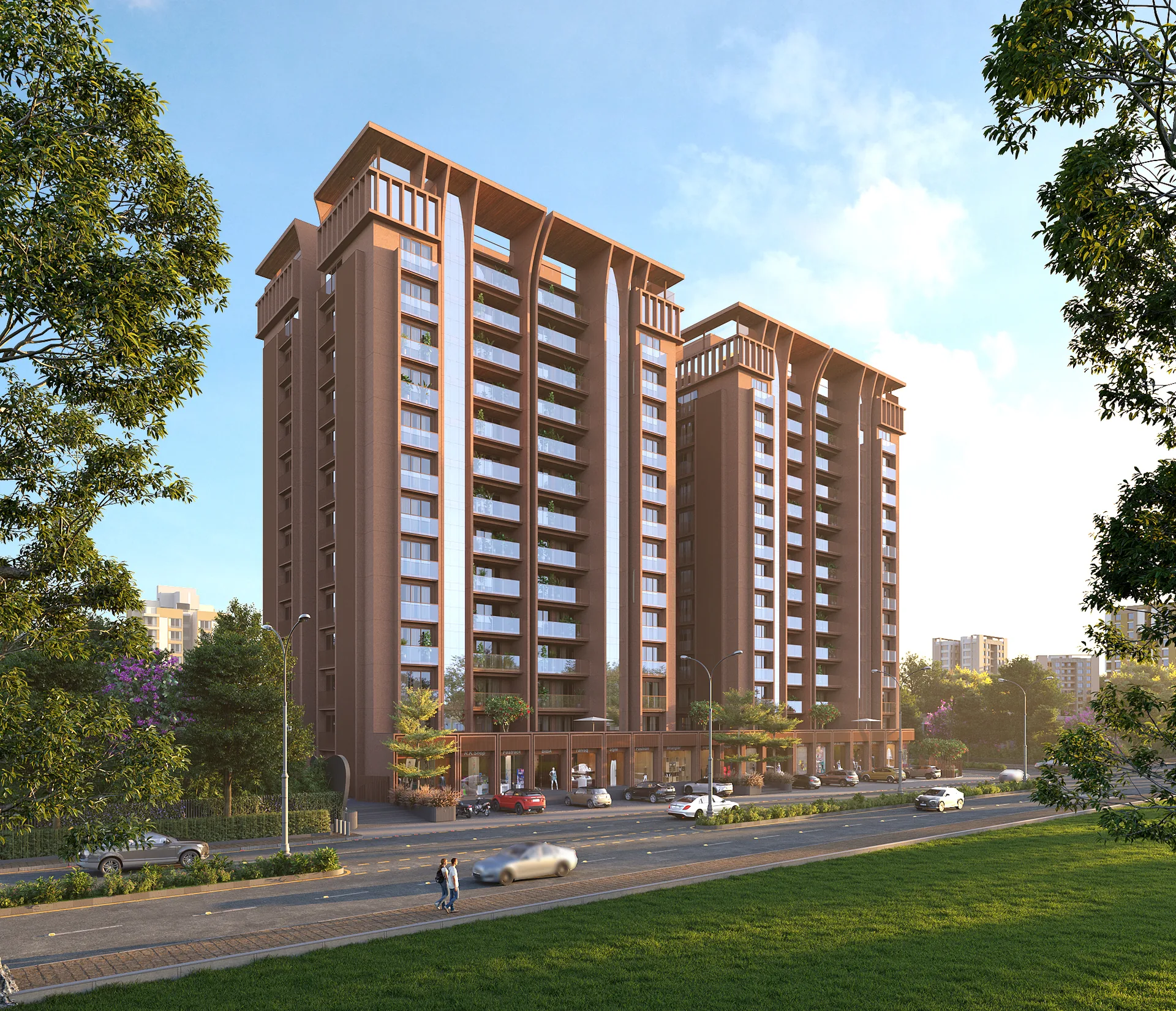
Ariva is a RERA-registered mixed development at Palm Road, Sargasan, with 102 three-bedroom homes in twin G+13 towers and ground-floor retail. This editorial page explains how to build a Gandhinagar cost worksheet — it does not publish Ariva unit prices, unofficial per-square-foot bands or hypothetical totals.

Those figures change with inventory, floor and approved schedules. Request the sales-approved cost sheet to see current base price, statutory treatment, GST lines, parking, deposits and milestone schedule for your shortlisted unit.

GujRERA registration: PR/GJ/GANDHINAGAR/GANDHINAGAR/Gandhinagar Municipal Corporation/MAA17033/290626/300632. Verify the latest official record independently before making a booking decision.

Frequently asked questions

What charges sit outside the base price of a 3 BHK in Gandhinagar?

Common items outside the headline base price include stamp duty, registration fee, GST where applicable on under-construction sales, parking or floor-rise premiums, club or amenity deposits, maintenance and corpus contributions, legal and loan processing charges, and interior fit-out. Always request a written all-in quotation from the promoter.

When does GST apply to a flat purchase in Gujarat?

GST generally applies when a promoter sells an under-construction residential unit under the applicable GST framework. Ready-to-move sales after occupancy or completion certificates are issued are typically treated differently. Confirm the project stage, invoice structure and GST rate in the approved cost sheet and agreement.

Is parking always included in the quoted 3 BHK price?

Not always. Some quotations list one car parking as included while additional bays, covered parking or visitor parking are charged separately. Match the parking schedule in the quotation with the draft Agreement for Sale and the registered inventory where available.

How do I compare two 3 BHK quotations fairly?

Use the same worksheet for both offers: base unit price, statutory charges, GST if applicable, parking, floor rise, deposits, maintenance and corpus, and loan-side costs. Compare the same area definition and possession timeline.

What is stamp duty on property in Gujarat?

Gujarat stamp duty is commonly quoted at 4.9% of the property value, comprising a basic duty plus surcharge, calculated on the higher of the agreement value or the government guideline value. Verify the current rate and calculation on the official GARVI portal before budgeting.

Are registration charges different for women buyers in Gujarat?

Gujarat policy has provided registration-fee concessions for sole female ownership in many cases, while joint ownership involving a male co-owner may attract the standard registration fee. Confirm the current rule and your ownership structure on GARVI before you budget.

What is a maintenance corpus and why does it matter?

A corpus is usually a one-time capital contribution to the society or maintenance pool for long-term upkeep of common assets. It is separate from monthly maintenance. Ask whether it is refundable, how it is accounted for, and whether GST applies to the payment.

Should I budget for loan processing separately from the flat price?

Yes. Home-loan buyers should budget processing fees, legal and technical charges, insurance where required, and any differential between the bank's valuation and the agreement value. These are not part of the promoter's base quotation.

Can I rely on a portal's per-square-foot rate as the total cost?

No. Portal rates are often marketing anchors and may exclude taxes, parking, floor premiums, deposits and statutory charges. Request the promoter's approved all-in cost sheet for the exact unit you plan to buy.

How do I get Ariva's current approved cost details?

Ariva's current approved pricing and charge schedule are shared by the sales team on request. Use the contact section on the Ariva microsite to request the official cost sheet for your preferred unit type rather than relying on unofficial estimates.

Author & sources

Shree Buildcon Editorial Team — Gandhinagar-focused buyer guidance reviewed against official GARVI, registration and GST references. Editorial review completed 15 July 2026. This guide is not tax, legal, loan or investment advice.

Review policy: refresh monthly or whenever Gujarat stamp duty, registration or GST guidance changes. Do not publish unofficial Ariva price bands without sales approval.